Written by: Ahmad Khan, PhD, Program Director, UW–Madison
The Intelligence Behind Modern Battery Systems
When people think about batteries, they usually picture chemistry. Lithium, nickel, cobalt, and manganese may be what comes to mind. However, in modern energy systems, chemistry alone doesn’t make a battery useful. Intelligence does.
That intelligence lives in the Battery Management System (BMS).
Every electric vehicle, grid-storage container, drone, medical device, and industrial battery pack relies on a BMS to make thousands of real-time decisions every second: how much current to allow, which cells to balance, when to limit power, and when to shut down entirely. Without that digital nervous system, even the most advanced battery chemistry would be unstable, unreliable, and short-lived.
The real breakthrough in modern batteries isn’t just chemistry: it’s control.
Batteries Are Not One Big Battery
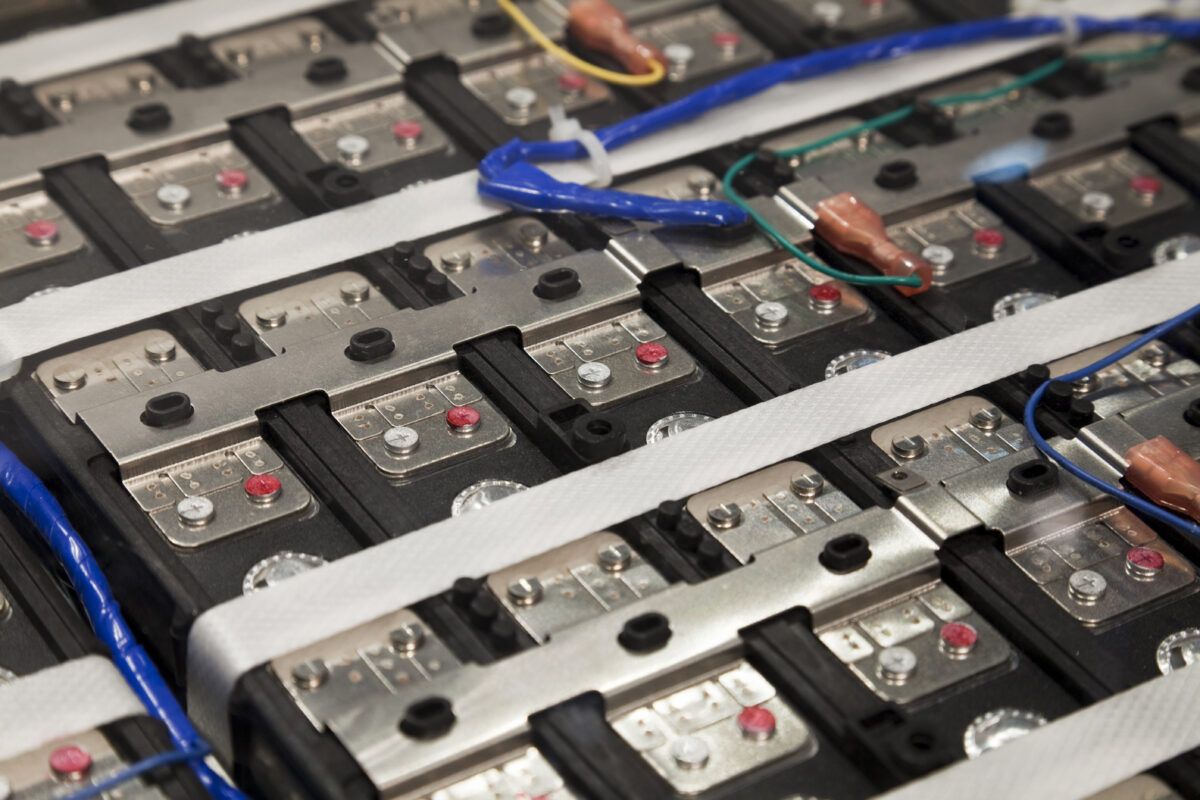
A battery pack is not a single energy reservoir. It is a network of individual cells, each with slightly different manufacturing tolerances, temperatures, aging rates, and internal resistance. Over time, those differences grow. One weak cell can quietly limit the performance and safety of the entire pack.
The BMS exists to manage this reality. It measures every cell, identifies imbalances, and actively redistributes energy so that no single cell becomes overstressed. This process (cell balancing) is one of the most important factors in determining how long a battery lasts and how safely it operates.
Without it, packs would degrade rapidly and unpredictably.
Estimation and Modeling
A key function of the BMS is estimating internal battery states that cannot be measured directly. These include quantities such as remaining charge, available power, and long-term degradation. The system derives these values by combining sensor data (voltage, current, temperature) with mathematical models that account for electrochemical behavior, operating history, and aging effects.
These estimates are used to determine charging limits, power capability, and protection thresholds. Their accuracy directly affects range prediction, charge time, and long-term reliability, making state estimation one of the most technically demanding aspects of BMS design.
Why BMS Is Becoming Strategic
Battery packs are now among the most expensive components in electric vehicles and energy systems. Their performance determines range, charging speed, warranty cost, safety, and resale value. That makes BMS design a strategic capability, not just an electronics add-on.
Manufacturers that understand how to extract more usable energy, more cycle life, and more reliability from the same battery cells gain a real competitive advantage. This is why automotive OEMs, energy companies, and startups alike are investing heavily in in-house BMS development.
As electrification expands across transportation, industry, and infrastructure, Battery Management Systems will remain a foundational technology–enabling safe, reliable, and cost-effective battery deployment.
Learn More
Expand your knowledge on battery systems with courses from InterPro, including Batteries for EV Applications and Fundamentals of Battery Management Systems.