What Wisconsin Can Teach Us About the Future of Manufacturing Leadership
By James Rink, EdD
Director, Center for Quick Response Manufacturing
If you’ve attended a manufacturing conference over the past year, you’ve probably noticed a common theme. Nearly every keynote, panel discussion, and vendor presentation eventually turns to artificial intelligence. And for good reason. AI, advanced automation, digital engineering, connected manufacturing platforms, robotics, and even quantum computing have the potential to fundamentally reshape manufacturing.
As I’ve thought about this over the past several months, I’ve found myself asking a different question: If the technology is available to everyone, what will actually determine who leads?
The next era of manufacturing leadership will depend less on who adopts technology first and more on which regions learn together the fastest.
That may seem like an odd conclusion at a time when so much of the conversation revolves around artificial intelligence. But history suggests that technology alone has rarely created a lasting competitive advantage.
We’ve been here before. Lean manufacturing, Six Sigma, enterprise systems, additive manufacturing, and Industry 4.0 all changed manufacturing. Yet the organizations that benefited most weren’t always the first to adopt the technology. They were the ones who learned how to integrate it into their people, processes, and culture. They learned faster than everyone else.
The same will be true with artificial intelligence.
The difference is the pace. New capabilities emerge almost weekly, and no one can say with confidence exactly what manufacturing will look like ten years from now. No single organization is going to solve these challenges on its own.
Manufacturing leadership has always depended on more than technology. Increasingly, I believe it will depend on how effectively manufacturers and their partners learn from one another and solve problems together.
As organizations recognize that optimizing for the “lowest cost” doesn’t always produce the best long-term results, supply chains are becoming more regional. That creates an opportunity for regions that can bring manufacturers, universities, workforce organizations, and public partners together in new ways. Wisconsin already possesses many of those ingredients: world-class research universities, an outstanding technical college system, innovative manufacturers, strong industry associations, economic development organizations, and a long history of solving real industrial challenges through collaboration.
The opportunity isn’t to build something new. It’s to connect what we already have.
When those organizations are connected, ideas move into practice more quickly, manufacturers gain faster access to new technologies and talent, and companies of every size are better positioned to succeed.
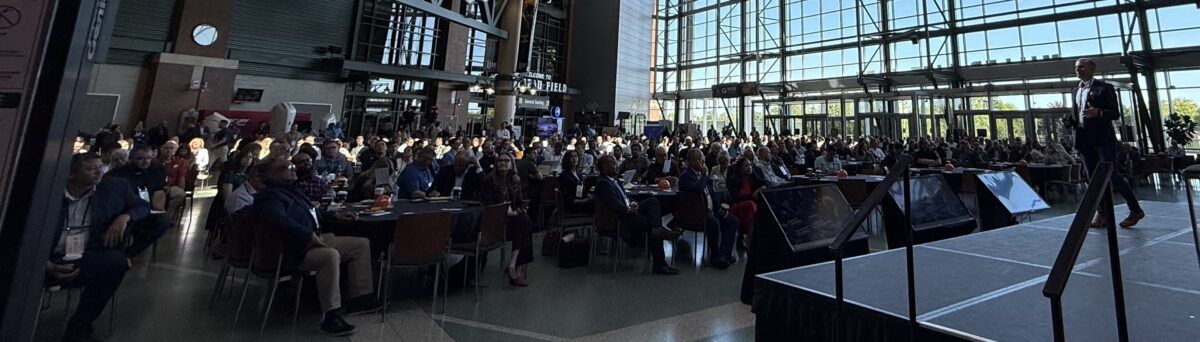
That’s one of the reasons I found the Wisconsin Drives Manufacturing Summit so encouraging. More than 700 participants representing over 100 partner organizations came together around a shared commitment to Wisconsin manufacturing. The summit’s greatest significance isn’t what happened that day. It’s what happens next.
If we build on that momentum by connecting the initiatives already underway across Wisconsin and expanding collaboration throughout the Upper Midwest, we can accelerate innovation, help our manufacturers adapt more quickly, and move new ideas to the factory floor faster.
Beyond educating students and advancing research, universities also serve as trusted conveners, bringing together manufacturers, researchers, educators, workforce organizations, entrepreneurs, economic development leaders, and government partners to help tackle challenges that are simply too large for any one organization to solve.
To me, that’s the Wisconsin Idea in action. It’s the belief that the university’s knowledge, research, and expertise should extend beyond campus boundaries to strengthen our industries, our communities, and our state.
At UW-Madison, we’re fortunate to work with manufacturers across industries, company sizes, and stages of their learning journey. Through the College of Engineering, Interdisciplinary Professional Programs (InterPro), UWEBC, and our partnerships across the state, we can convene people and organizations that might not otherwise work together. I believe that’s one of the most important ways a public research university can help advance manufacturing leadership.
That isn’t simply about delivering education. It’s about building the relationships and connections that help manufacturers and their partners learn together, innovate together, and compete more effectively.
Artificial intelligence will continue to evolve, as will advanced automation, digital engineering, and technologies we haven’t yet imagined.
But manufacturing leadership won’t be determined by technology alone. It will belong to the regions that learn together the fastest.
That’s the future I hope we build together.
Learn more about our Manufacturing Workforce Solutions.