
When Mustapha Dukureh was assigned to a solar energy project in Chad, he found himself navigating unfamiliar territory. His career had focused on water and sanitation, but this new opportunity required expertise in renewable energy. As a student in the University of Wisconsin–Madison’s online Master of Engineering in Engineering Management (MEM) program, he found a way to expand his knowledge while continuing to advance his career.
Building Leadership Skills for Complex Projects
Like many working professionals, Mustapha entered the MEM program with a desire to strengthen his leadership and management capabilities while continuing to advance his career.
Working on large-scale infrastructure projects across multiple countries, he recognized that successful project delivery requires more than engineering expertise.
“The combination of leadership, management, technical, and financial knowledge offered through the MEM program aligned closely with my career aspirations,” he said.
The program’s practical approach also allowed him to apply classroom concepts directly to his work, making the experience especially valuable as a working professional.
A New Direction in Renewable Energy
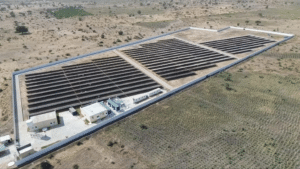
While enrolled in the MEM program, he joined the Islamic Development Bank as a Project Implementation Officer and was assigned to support the Kalam-Kalam Solar PV Project in Chad, a 3 MWp solar installation. Although his background was primarily in water and sanitation infrastructure,
the project sparked a strong interest in renewable energy and its role in supporting sustainable development across Africa.
Soon afterward, he was invited to help support the preparation and appraisal of a 100 MWp solar project in Niger State, Nigeria.
“As a working professional, graduate education is most valuable when it responds to the challenges and opportunities we encounter in our careers,” he said.
Recognizing the need for a deeper understanding of solar energy, he worked with MEM leadership to enroll in a graduate solar energy course outside the program’s traditional curriculum. For him, that flexibility became one of the most valuable aspects of the MEM experience.
“It allowed me to connect my education with my evolving professional responsibilities, making the learning experience more relevant and rewarding.
Connecting Coursework to Real-World Projects
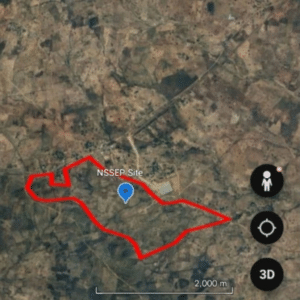
The solar energy course provided hands-on experience evaluating site constraints, environmental impacts, financial feasibility, and Levelized Cost of Energy (LCOE), while also emphasizing collaboration across multidisciplinary teams. What stood out most was how closely the coursework reflected the realities of project development.
Through team projects and interactions with industry specialists, he gained a deeper understanding of how technical, environmental, and financial decisions influence renewable energy investments. The experience mirrored his work at the Islamic Development Bank, where diverse teams collaborate to move projects from concept and appraisal through implementation.
Those lessons proved immediately applicable to both the Chad solar project and the larger initiative in Nigeria, strengthening his ability to engage with technical experts and contribute to project development.
Applying New Expertise to a Changing Career
Looking back, the alumnus sees his MEM experience as more than earning a graduate degree. The program helped him develop leadership and management capabilities while giving him the flexibility to pursue specialized knowledge when his career direction changed.
“What began as an unfamiliar assignment developed into a strong professional interest and an opportunity to contribute to major renewable energy projects,” he said. “The experience reinforced that professional growth requires a willingness to step outside one’s area of expertise and continue learning.”